

Series: The Venture Studio Founder (Part 2 of 4)
Series Navigation:
Part 1: Founder Mindset vs. Operator Mindset
Part 2: Navigating Studio Partnership (Current)
Part 3: Building with Transparency
Part 4: The Founder Journey to Independence
The venture studio founder faces a unique challenge unknown to traditional entrepreneurs: building a company while partnered with the organization that created it.
This partnership model offers enormous advantages—resources, expertise, network, capital, de-risked opportunities. But it also creates tension: How do you lead with authority while accepting guidance? How do you leverage studio support without becoming dependent? How do you maintain founder autonomy within a partnership structure?
Getting this balance right determines both venture success and founder satisfaction.
Founders who navigate studio partnership masterfully build faster and better than solo founders. Founders who struggle with the dynamic either reject valuable support or become overly dependent, stunting both personal growth and venture potential.
This article explores how exceptional studio-backed founders leverage partnership advantages while maintaining the independence necessary for entrepreneurial success.
Understanding the Studio Partnership Model
Before mastering the dynamic, founders must understand what partnership actually means.
What Studio Partnership Is
A structured collaboration:
Studio provides resources and support
Founder leads with accountability
Shared equity and aligned incentives
Board-level governance
Long-term relationship
Not employment:
Founder is CEO, not employee
Decision-making authority
Strategic ownership
Leadership responsibility
Entrepreneurial role
Not pure investment:
More hands-on than VC
Operational involvement
Resource provision
Active partnership
Ongoing collaboration
A unique hybrid model.
The Value Proposition
What founders get:
Resources:
Capital for building
Platform team support
Shared services (legal, finance, HR)
Tools and systems
Office space and infrastructure
Expertise:
Domain knowledge
Functional best practices
Pattern recognition across portfolio
Operational guidance
Network access
De-risking:
Validated opportunity
Product development support
Go-to-market guidance
Hiring assistance
Strategic counsel
Credibility:
Studio reputation and brand
Investor relationships
Customer introductions
Partnership facilitation
Team recruitment advantage
What studios get:
Equity ownership (typically 40-60%)
Board seat and governance
Portfolio returns
Learning and insights
Brand enhancement
The Tension Points
Where partnership creates friction:
Control vs. Autonomy:
Who makes final decisions?
How much oversight is appropriate?
When does guidance become control?
What authority does founder truly have?
Speed vs. Process:
Founder wants to move fast
Studio has approval processes
Resource allocation takes time
Governance creates overhead
Risk Tolerance:
Founders willing to bet big
Studios manage portfolio risk
Different comfort with failure
Asymmetric downside exposure
Vision Alignment:
Founder sees long-term vision
Studio has nearer-term focus
Different perspectives on pivots
Strategic disagreements
Independence Timeline:
Founders want autonomy quickly
Studios want involvement longer
Transition timing disputed
Decreasing engagement painful
These tensions are natural and manageable—if handled well.
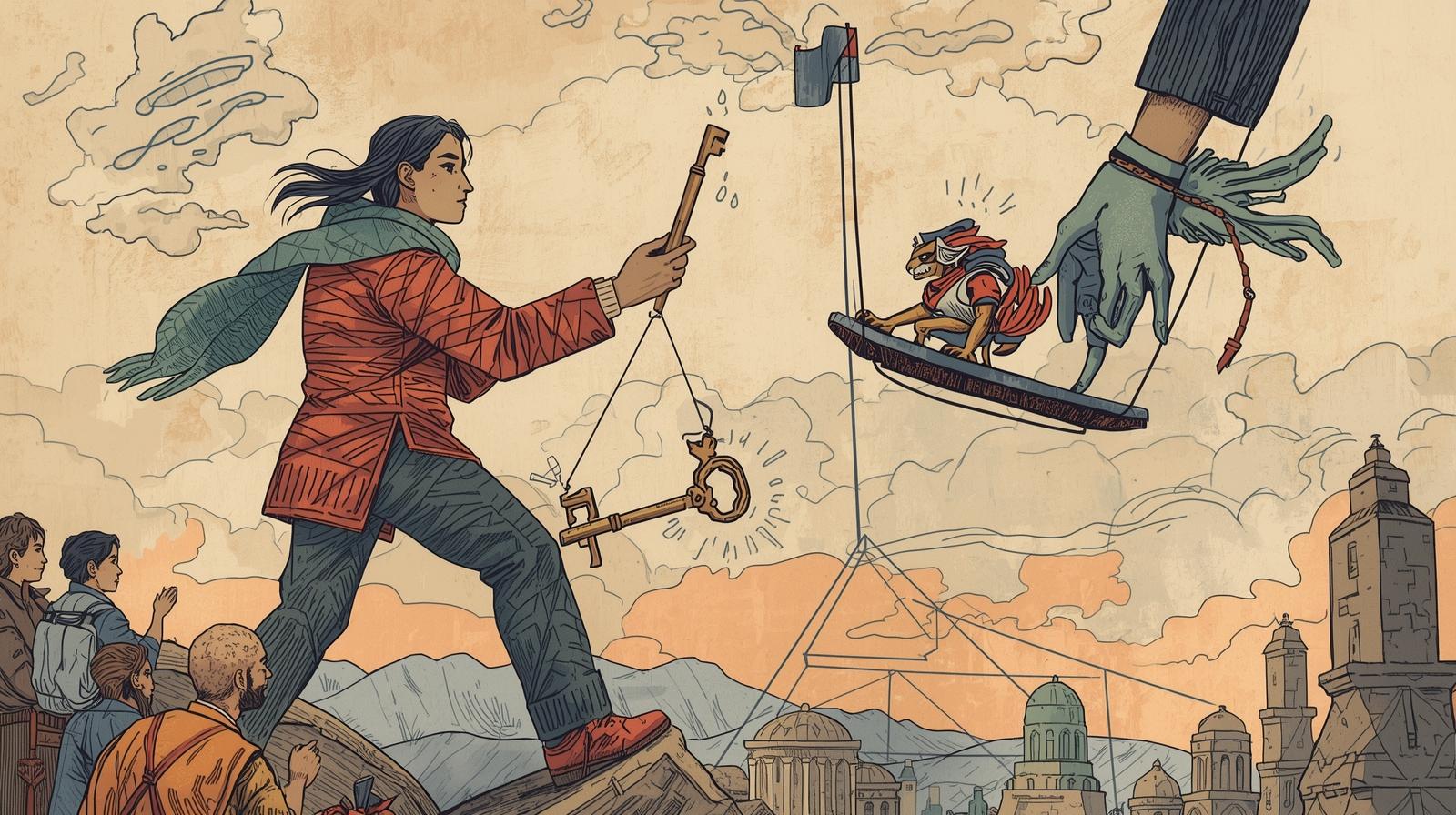 The Founder Autonomy Spectrum
Studio-backed founders operate across a spectrum of independence.
Stage 1: Highly Supported (Months 0-6)
The dynamic:
Studio heavily involved
Regular guidance and input
Frequent check-ins
Active problem-solving partnership
High touch relationship
Founder autonomy: 40-60%
Appropriate at this stage:
Building foundation
Learning studio methodology
Leveraging platform team
Establishing patterns
Developing capabilities
Founder responsibilities:
Own product decisions
Lead team effectively
Drive customer development
Set priorities within strategy
Execute with excellence
Studio responsibilities:
Provide resources
Guide major decisions
Solve systemic problems
Enable founder success
Build capabilities
The key: Accept support without dependency.
Stage 2: Guided Independence (Months 6-18)
The dynamic:
Studio transitioning to board role
Weekly/bi-weekly check-ins
Consultation on major decisions
Decreasing operational involvement
Increasing founder authority
Founder autonomy: 60-80%
Appropriate at this stage:
Finding product-market fit
Scaling initial traction
Building full team
Establishing independence
Preparing for fundraising
Founder responsibilities:
All day-to-day decisions
Strategic direction
Team building
Customer acquisition
Most resource allocation
Studio responsibilities:
Board governance
Strategic counsel
Network access
Specific problem-solving
Fundraising support
The key: Independent operation with strategic partnership.
Stage 3: Full Independence (Months 18+)
The dynamic:
Studio as board member only
Monthly/quarterly interaction
Major strategic decisions only
Venture fully independent
Arms-length relationship
Founder autonomy: 90%+
Appropriate at this stage:
Product-market fit achieved
External funding raised
Full team in place
Clear growth trajectory
Mature operations
Founder responsibilities:
Everything
Complete ownership
Full decision authority
Strategic and tactical
Company leadership
Studio responsibilities:
Board seat and governance
Available when needed
Network and relationships
Exit planning eventually
Respect for independence
The key: True founder-CEO with board oversight.
The Evolution Should Be Deliberate
Not automatic:
Earn autonomy through performance
Demonstrate capability progressively
Build trust over time
Prove readiness for independence
Not overnight:
Gradual transition
Increasing responsibility
Decreasing studio involvement
Mutual comfort with independence
Negotiated openly:
Discuss autonomy explicitly
Align on appropriate level
Adjust based on needs
Clear expectations
Strategies for Effective Studio Partnership
How exceptional founders leverage studios without losing themselves.
Strategy #1: Come with Recommendations, Not Questions
Ineffective approach:
"What should we do about X?"
"Which direction do you think?"
"What would you recommend?"
Waiting for studio to provide answers
Effective approach:
"Here's what I recommend for X and why"
"I'm leaning toward this direction because..."
"My recommendation is Y. What am I missing?"
Coming with point of view
Why this matters:
Demonstrates:
Strategic thinking capability
Ownership of decisions
Founder mindset
Independent judgment
Leadership
Enables:
Better advice (react to proposal)
Faster decisions
Productive dialogue
Mutual respect
Appropriate role clarity
Example transformation:
Before: "We're getting feedback that pricing might be too high. What do you think we should do?"
After: "I'm planning to test a $79/month tier for SMBs based on customer feedback showing price resistance. We'd run a 90-day test with 20% of new signups. If conversion improves without hurting ARPU, we'd expand. Thoughts on this approach or am I missing something?"
Same input requested, completely different dynamic.
Strategy #2: Be Transparent About Challenges
Ineffective approach:
Hide problems until critical
Present only good news
Spin negative signals
Avoid difficult conversations
Hope issues resolve independently
Effective approach:
Share challenges early
Present problems transparently
Ask for help appropriately
Maintain open communication
Build trust through honesty
Why this matters:
Early disclosure enables:
Timely guidance and support
Resource mobilization
Network leverage
Pattern recognition (studio has seen it)
Prevention of bigger problems
Hiding creates:
Loss of trust
Missed opportunities for help
Bigger crises later
Damaged relationship
Reduced autonomy (need oversight)
The balance: Transparent about challenges, confident about solutions.
Example:
Good: "We're seeing weaker retention than expected—60% at 90 days vs. 75% target. I believe it's the onboarding flow based on user interviews. I'm planning to redesign that experience over next 4 weeks. But wanted to flag this early and see if you've seen similar patterns or have insights."
Bad: [Say nothing for 3 months until crisis, then] "Retention is terrible and we're in trouble."
Strategy #3: Leverage Expertise, Don't Outsource Thinking
The distinction:
Leverage (good):
"You've built GTM for similar companies. What patterns have you seen work?"
"Can you introduce me to three people who've solved this problem?"
"What am I not thinking about with this pricing decision?"
Using studio knowledge to inform your thinking
Outsource (bad):
"You design the GTM strategy"
"Tell me who to hire"
"What price should we charge?"
Asking studio to think for you
Why this matters:
Founders must develop their own judgment and capabilities. Studios can accelerate learning but can't substitute for founder development.
Framework:
Ask studios for:
Pattern recognition ("What have you seen?")
Network access ("Who should I talk to?")
Experience sharing ("What would you consider?")
Blind spot identification ("What am I missing?")
Resources and support ("How can you help?")
Don't ask studios for:
Your strategic decisions
Your prioritization
Your judgment calls
Your vision and direction
Your entrepreneurial responsibility
Strategy #4: Build Your Own Network
Ineffective approach:
Rely solely on studio intros
Only meet people through studio
Studio network is your network
Depend on studio relationships
Remain connected only through studio
Effective approach:
Build independent network
Create your own relationships
Develop direct connections
Establish personal brand
Maintain separate identity
Why this matters:
For venture:
More diverse perspectives
Broader opportunity set
Independent deal flow
Relationship resilience
Company not dependent on studio
For founder:
Personal brand development
Career optionality
Learning from multiple sources
Peer community
Future opportunities
Practical actions:
Attend industry events independently
Build relationships with customers
Connect with other founders
Develop investor relationships
Create thought leadership
Studio connections are launchpad, not ceiling.
Strategy #5: Communicate Decision-Making Authority
The challenge: Ambiguity about who decides what.
The solution: Explicit clarity.
Framework for decision rights:
Founder has final authority:
Day-to-day operations
Product roadmap and features
Hiring (except C-level)
Marketing and sales tactics
Technology decisions
Customer targeting
Budget allocation within parameters
Board approval required:
Annual budget and plan
C-level hires and fires
Major pivots in strategy
Capital raises and terms
M&A or exit decisions
Budget increases >X%
Major partnerships/contracts >$Y
Mutual discussion (no veto):
Strategic direction
Market positioning
Growth strategies
Fundraising timing
Key hires
Major experiments
Document this explicitly in founder agreement.
When decisions unclear:
Ask directly: "Is this my call or board decision?"
Better to clarify than assume
Respect the framework
Build trust through alignment
Strategy #6: Push Back When Appropriate
Founders must disagree constructively:
When to push back:
Studio recommendation conflicts with founder conviction
Advice doesn't fit context
Guidance feels overly controlling
Decision should be founder's
Studio missing important information
How to push back effectively:
Poor approach:
Defensive or emotional
Dismissive of input
Argumentative
Closed to discussion
Binary win/lose mindset
Strong approach:
"I hear your concern about X. Here's why I see it differently..."
"That approach makes sense in general, but in this specific context..."
"I appreciate the guidance. I'm going to move forward with my approach because..."
"Can we discuss why you recommend that? I'm seeing it differently..."
Respectful but firm
Example:
Studio Partner: "I think you should focus entirely on SMB for now and abandon enterprise."
Weak Founder: "Okay, if you think so..."
Strong Founder: "I understand that logic, and SMB is our primary focus. But we have three enterprise pilots that are generating valuable feedback and potential reference customers. I want to continue those while keeping SMB as 80% of resources. Here's why I think that's the right tradeoff..."
Trust increases when founders think independently.
Strategy #7: Transition the Relationship Progressively
Plan the evolution:
Months 0-6:
Accept heavy involvement
Learn from proximity
Build capabilities
Establish trust
Develop independence skills
Months 6-12:
Gradually increase autonomy
Reduce check-in frequency
Transition platform resources
Build own team
Demonstrate capability
Months 12-18:
Move to board-level relationship
Monthly/quarterly meetings
Strategic discussions only
Largely independent
Maintain strong relationship
Months 18+:
Fully independent operation
Studio as board member
Occasional strategic guidance
Arms-length relationship
Mutual respect maintained
Discuss this openly:
"I'm ready for more autonomy in X"
"Can we reduce check-ins to weekly?"
"I'd like to transition platform resources over next quarter"
Proactive about evolution
Common Partnership Pitfalls
Mistakes that damage the relationship or stunt founder growth.
Pitfall #1: Treating Studio as Boss
The mistake:
Act like studio is employer
Seek permission constantly
Defer all decisions upward
Subordinate mindset
Employee behavior
Why it fails:
Founders aren't employees
Stunts leadership development
Creates dependency
Loses respect
Undermines authority with team
The fix:
Remember you're CEO
Lead with authority
Make decisions
Own outcomes
Partnership, not employment
Pitfall #2: Rejecting All Guidance
The mistake:
Dismiss studio input
Ignore experience and patterns
Reinvent every wheel
Defensive about suggestions
Overly protective of autonomy
Why it fails:
Miss valuable insights
Repeat known mistakes
Damage relationship
Waste studio resources
Arrogance not confidence
The fix:
Listen openly
Consider seriously
Synthesize input
Make informed decisions
Grateful but independent
Pitfall #3: Hiding Problems
The mistake:
Keep challenges secret
Present only positive news
Avoid difficult conversations
Hope problems resolve
Protect image
Why it fails:
Prevents timely help
Erodes trust
Creates bigger crises
Damages relationship
Reduces autonomy when discovered
The fix:
Transparent communication
Early disclosure
Problem + proposed solution
Ask for help appropriately
Build trust through honesty
Pitfall #4: Over-Reliance on Studio Resources
The mistake:
Never build own capabilities
Depend on platform indefinitely
Don't hire own team
Can't function without studio
Delay independence
Why it fails:
Never achieve self-sufficiency
Can't scale independently
Expensive for studio
Prevents maturation
Limits venture potential
The fix:
Build capabilities progressively
Hire own team systematically
Transition off platform deliberately
Work toward independence
Use studio as bridge not crutch
Pitfall #5: Misaligned Expectations
The mistake:
Assume autonomy without earning it
Expect immediate independence
Unclear on decision rights
Different views on involvement
Never discuss explicitly
Why it fails:
Constant friction
Resentment builds
Conflicts escalate
Trust erodes
Relationship damaged
The fix:
Discuss expectations explicitly
Document decision rights
Align on autonomy progression
Regular relationship check-ins
Clear, open communication
The Founder-Studio Communication Framework
Structure that enables effective partnership.
Regular Rhythms
Weekly (Months 0-6):
30-60 minute check-in
Progress and challenges
Major decisions discussion
Resource needs
Problem-solving
Bi-weekly (Months 6-12):
30-45 minute check-in
Strategic discussions
Key metrics review
Guidance as needed
Decreasing frequency
Monthly (Months 12+):
Board meeting format
Strategic review
Performance metrics
Major decisions
Formal governance
Quarterly (Independent stage):
Board meetings
Strategic planning
Performance review
Future direction
Relationship maintenance
Communication Content
Always include:
Key metrics and progress
Major wins and challenges
Strategic decisions made
Help needed (specific)
Learning and insights
Avoid:
Only good news
Overwhelming detail
Problems without proposed solutions
Asking for thinking to be done
Lack of preparation
When to Escalate to Studio Partner
Appropriate escalation:
Major strategic decisions
Significant problems emerging
Resource needs beyond normal
Relationship issues with team
External threats or opportunities
Fundraising discussions
Keep handling yourself:
Day-to-day challenges
Normal operational decisions
Team management issues (below C-level)
Customer conversations
Product iterations
Routine problem-solving
The test: "Is this something only they can help with, or can I handle it?"
Building a Healthy Founder-Studio Relationship
Long-term practices that strengthen partnership.
Practice #1: Mutual Respect
Founders respect studio:
Acknowledge their contribution
Value their experience
Appreciate their support
Recognize their risk
Honor their investment
Studios respect founder:
Trust their judgment
Support their decisions
Honor their authority
Recognize their capability
Enable their independence
Mutual respect creates foundation for everything else.
Practice #2: Clear Boundaries
Define explicitly:
Decision-making authority
Communication expectations
Resource access and limits
Financial parameters
Strategic alignment requirements
Document formally:
Founder agreement
Board governance docs
Operating agreements
Clear written understanding
Discuss regularly:
Relationship check-ins
Boundary adjustments
Clarification as needed
Proactive alignment
Practice #3: Celebrate Wins Together
Share success:
Credit studio support
Celebrate milestones jointly
Acknowledge contributions
Build positive momentum
Reinforce partnership
Studio celebrates founder:
Recognize achievements
Share founder success
Support publicly
Build founder brand
Genuine pride in success
Success strengthens bond.
Practice #4: Learn from Conflicts
When disagreements happen:
Address directly
Seek to understand
Find resolution
Learn from experience
Strengthen relationship
Avoid:
Letting resentment build
Indirect communication
Taking sides with team
Public criticism
Relationship damage
Healthy conflict handled well builds trust.
Practice #5: Plan the Evolution
Discuss transition explicitly:
When will autonomy increase?
What triggers more independence?
How does involvement decrease?
What does independence look like?
Timeline for full spin-off
Make it deliberate:
Not automatic
Based on capability demonstration
Mutual agreement
Clear milestones
Celebrated progression
Conclusion: Partnership as Competitive Advantage
Studio-backed founders who master partnership dynamics build better companies faster.
Key Takeaways:
The Model: Partnership not employment or pure investment. Shared equity, aligned incentives, structured collaboration.
The Evolution: Highly supported → Guided independence → Full autonomy. Progressive over 18-24 months typically.
Effective Strategies:
Come with recommendations, not questions
Transparent about challenges
Leverage expertise, don't outsource thinking
Build independent network
Communicate decision authority clearly
Push back when appropriate
Transition relationship progressively
Common Pitfalls: Treating studio as boss, rejecting all guidance, hiding problems, over-reliance, misaligned expectations.
The Framework: Clear communication rhythms, explicit boundaries, mutual respect, celebrate wins, learn from conflict.
The Outcome: Founders who embrace partnership while maintaining autonomy achieve the best outcomes—building faster and better than solo founders while developing their own capabilities and independence.
The partnership model is feature, not bug—when navigated well.
In the next part, we'll explore how founders build with transparency—knowing when to share, when to protect, and how trust creates velocity.
Continue Reading: [Part 3: Building with Transparency →]
Series Navigation:
Part 1: Founder Mindset vs. Operator Mindset
Part 2: Navigating Studio Partnership (Current)
Part 3: Building with Transparency
Part 4: The Founder Journey to Independence
References
Note: This article synthesizes best practices from studio-backed founders and studio operators, drawing from interviews, case studies, and operational experience across the venture studio ecosystem.
Explore venture studios: Visit VentureStudiosHub.com to discover studio partnership opportunities.